



Indonesia Implements Strategies to Promote Religious Harmony
- 28 Feb 2025 08:08 WIB
- Voice of Indonesia
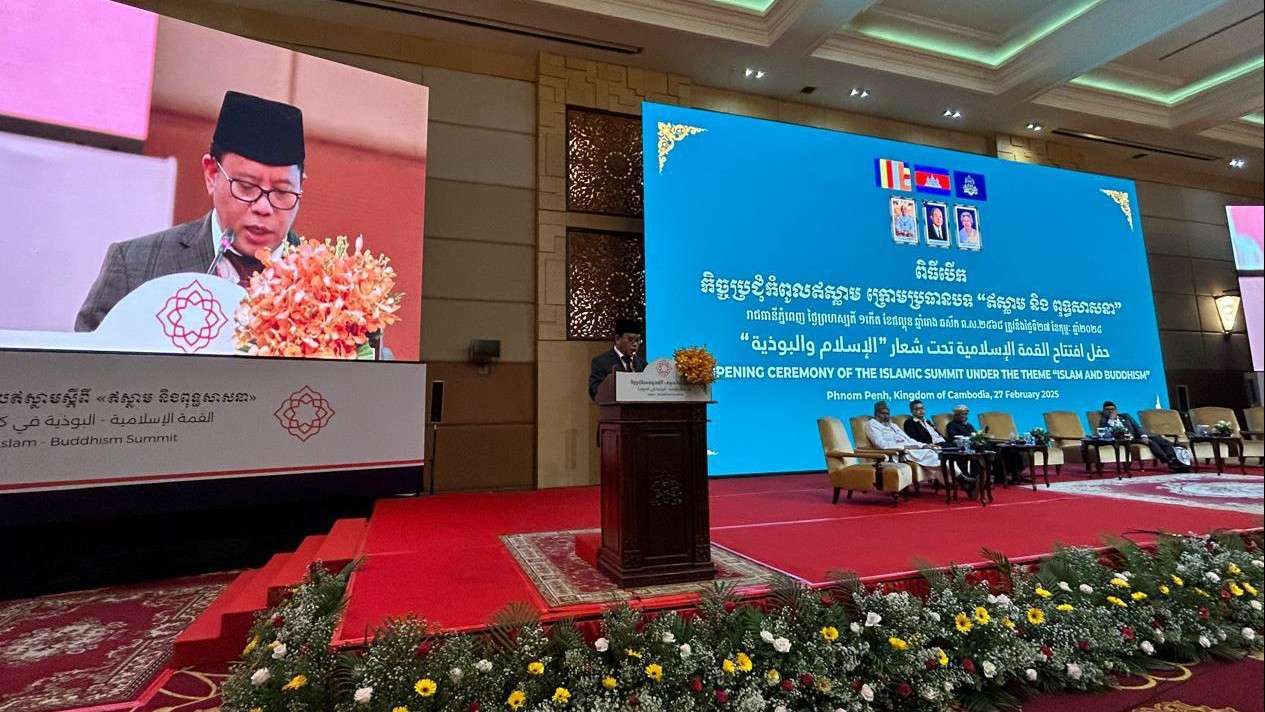
KBRN, Phnom Penh: Indonesia, a pluralistic nation with a diverse and multi-religious population, remains committed to fostering national unity and harmony. The Indonesia'sMinistry of Religious Affairs plays a key role in addressing the challenges of religious harmony.
In his keynote speech at the Muslim-Buddhist Summit in Phnom Penh, Cambodia, Thursday (27/2/2025), Secretary General of the Ministry of Religious Affairs, Kamaruddin Amin, outlined four key strategies being implemented to maintain this harmony.
“The challenge of religious harmony, particularly in a multicultural and multi-religious society, is further complicated by the rise of digital technology, which often fuels the spread of misinformation and hoaxes,” Kamaruddin said.
Kamaruddin highlighted the first strategy as strengthening interfaith dialogue institutions. In Indonesia, the Forum for Religious Harmony (FKUB) plays a pivotal role in managing interfaith dialogue and fostering harmony.
The second strategy focuses on engaging younger generations, particularly millennials and Gen Z, through interfaith youth exchange programs aimed at cultivating tolerance and cooperation from an early age.
“In Indonesia, we conduct interfaith youth dialogues. Additionally, at the regional level, ASEAN holds interfaith dialogues, attended by students, as seen in the MABIMS forum,” he explained.
The third strategy involves increasing international cooperation, particularly between Muslim and Buddhist countries. Kamaruddin emphasized the importance of sharing experiences in building tolerance and social harmony, given the unique demographic and religious landscapes of Indonesia and Cambodia.
“In Indonesia, Buddhists are a minority in a Muslim-majority country, while in Cambodia, Muslims are a minority in a Buddhist-majority country. Sharing such experiences is crucial for strengthening harmony and synergy,” Kamaruddin remarked.
The final strategy to address religious harmony challenges is empowering local religious communities by supporting interfaith initiatives that promote dialogue and collaboration. One example is establishing interfaith foundations focused on the economic development of communities and tackling humanitarian issues like poverty and environmental challenges.
Kamaruddin also highlighted Indonesia’s national initiative promoting tree planting by religious communities to combat climate change.
“If we can initiate concrete steps like these together, we believe that religious differences can become a unifying force rather than a dividing one,” Kamaruddin concluded.
News Recomendation
Loading latest news.....